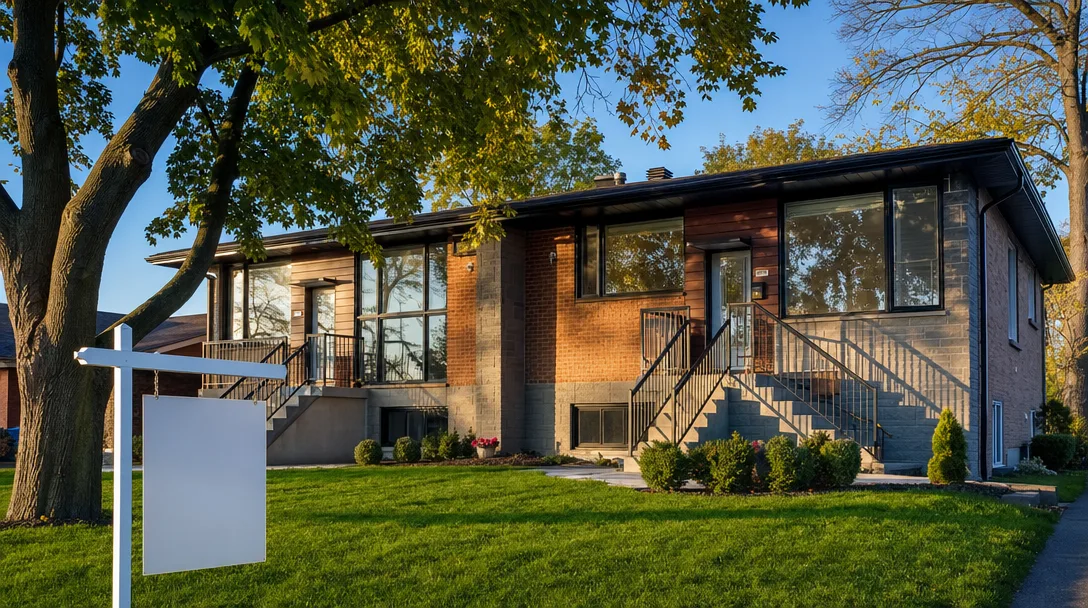
Selling an Investment Property on Hamilton Mountain: Tax Implications and Market Strategy for Ontario Investors in 2026
If you own a rental property on the Hamilton Mountain and have been considering selling, 2026 brings some of the clearest tax rules and most favourable market conditions we have seen in years. Here is what every Ontario investor needs to know.
By Tory Akene, REALTOR® | Real Broker Ontario Ltd. · · 8 min read
The Hamilton Mountain has long been a favourite market for Ontario real estate investors. With steady rental demand driven by McMaster University, Mohawk College, and the steady influx of GTA families, properties in areas like the West Mountain, Central Mountain, and Upper Stoney Creek have delivered reliable appreciation and cash flow for owners who bought wisely. But if you are thinking about selling an investment property this year, the combination of clarified tax rules and shifting market conditions makes 2026 an especially important time to plan your exit strategy carefully. Here is what you need to know as an Ontario investor selling on the Hamilton Mountain.
The Big Tax News: Capital Gains Inclusion Rate Stays at 50%
The single most important development for anyone selling an investment property in 2026 is that the capital gains inclusion rate has been confirmed at a flat 50% for all individuals, corporations, and trusts. A proposed increase to 66.67% on gains above $250,000 was announced in the 2024 federal budget and deferred multiple times, but the new federal government permanently cancelled that change in March 2025. This means there is no two-tier system and no $250,000 threshold to worry about.
Here is what that looks like in practice. If you sell a rental property on the Mountain and realize a $300,000 capital gain, only $150,000 (50%) is added to your taxable income. At a combined federal and Ontario marginal tax rate of roughly 43% for a high-income earner, the tax bill on that gain would be approximately $64,500. Under the proposed 66.67% rate that was cancelled, the same gain would have resulted in a tax bill of roughly $86,000. That is a meaningful difference, and it makes 2026 a relatively favourable year for investors considering an exit.
Sources: Wealthsimple, "Capital Gains Tax in Canada: How It Works in 2026"; Modern Axis, "Capital Gains Tax Canada 2026: Where the Rate Actually Landed"; Kaizen Real Estate, "Capital Gains on Selling Property in Ontario: 2026 Guide."
Calculating Your Capital Gain: The Formula Every Seller Needs
Understanding how your gain is calculated is the first step to planning your sale. The formula is straightforward:
Capital Gain = Selling Price - Adjusted Cost Base - Selling Costs
Selling Price — The amount your home sells for, net of any HST adjustments on new builds.
Adjusted Cost Base (ACB) — What you originally paid for the property, plus the cost of any capital improvements you made over the years (new roof, new furnace, renovated kitchen, basement finishing). Routine maintenance and repairs do not count toward the ACB.
Selling Costs — Real estate commission, legal fees, staging costs, and any mortgage penalties for breaking your term early.
For example, if you bought a duplex on the Mountain for $500,000 in 2016, added $50,000 in capital improvements over the years, and sold it in 2026 for $800,000 with $40,000 in selling costs, your capital gain would be $800,000 - $550,000 (ACB) - $40,000 = $210,000. Only $105,000 (50%) would be added to your taxable income.
Sources: Canada Revenue Agency (CRA), "Capital Gains"; WealthSimple, "Capital Gains Tax in Canada 2026"; Landed Money, "Principal Residence Exemption in Canada (2026)."
Principal Residence Exemption: Does Any of This Apply to You?
The Principal Residence Exemption (PRE) allows you to sell your primary home completely tax-free. But the rules are strict, and many investors get confused about how the exemption applies when they have lived in a property for part of its ownership period. Here are the key rules every Hamilton Mountain investor needs to know:
One Property Per Family Unit Per Year
For any given calendar year, only one property can be designated as a principal residence for your family unit (you, your spouse or common-law partner, and your minor children). If you own a home on the Mountain and a cottage up north, you can only exempt one of them from capital gains in each year.
The "+1" Year Rule
When you sell a property that was your principal residence for only part of the time you owned it, the CRA allows you to add one extra year to your designated years. This means virtually every property that was ever your principal residence receives a partial exemption covering at least one extra year. The formula is: Exempt Gain = Total Gain x (1 + Years Designated) / Total Years Owned.
You Must File Form T2091
Even if your gain is fully exempt under the PRE, you must report the sale on Schedule 3 of your tax return and file Form T2091 (Designation of a Property as a Principal Residence) in the year of sale. Failing to file this form can result in the CRA denying the exemption. This is one of the most common mistakes I see sellers make.
For pure investment properties that you never lived in, the PRE does not apply. The full capital gain (minus ACB adjustments and selling costs) is taxable at the 50% inclusion rate.
Sources: Landed Money, "Principal Residence Exemption in Canada (2026)"; Nihang Law, "Capital Gains Tax on Cottages in Ontario: 2026 Guide"; CRA, "Form T2091 Designation of a Property as a Principal Residence."
Current Market Conditions for Investment Property Sellers on the Mountain
Beyond the tax picture, the Hamilton Mountain market in late summer 2026 offers a favourable window for selling investment properties. Here is what the data shows:
Avg. Detached Home
$717K
Hamilton Mountain, June 2026
Avg. Days on Market
30 Days
Slightly faster than regional avg.
5-Year Fixed Rate
4.19%
Down significantly from 2024 highs
Sales-to-New-Listings
50%
Balanced market conditions
For investment properties specifically, the buyer pool is driven by two groups: end-users looking for a home they can move into immediately (common with well-maintained duplexes and triplexes where one unit is vacant), and first-time investors looking to enter the Hamilton market. Lower interest rates in 2026 have made financing more accessible for both groups, which supports pricing power for sellers.
One note specific to the Mountain: properties with legal secondary suites, separate entrances, and proper zoning documentation command a significant premium over those with unregistered or non-conforming units. If you are selling an investment property, having all your permits and municipal approvals in order before listing will directly impact the offers you receive. Buyers are increasingly cautious about assuming non-conforming units, and a clean legal setup is worth real money at the negotiating table.
The Mortgage Penalty Question: A Hidden Cost
One expense that surprises many investment property sellers is the mortgage prepayment penalty. If you are still within the term of a fixed-rate mortgage, breaking it early can cost three months' interest or the interest rate differential (IRD) — whichever is greater. On an investment property mortgage of $400,000 at a rate of 4.5%, that penalty could range from $4,500 to $8,000 or more, depending on how far rates have moved since you locked in.
Variable-rate mortgages typically carry a smaller penalty — usually three months' interest — but the specific terms vary by lender. I always advise clients to call their lender or check their mortgage commitment letter before listing so there are no surprises at closing. When you add up commission, legal fees, and a potential penalty, the total cost of selling can eat into your net proceeds more than you might expect.
Source: CMHC, "Mortgage Prepayment Penalties in Canada"; Ratehub.ca, "Mortgage Penalty Calculator."
Timing Your Sale: Why Late 2026 Makes Sense for Investors
If you have been sitting on the fence about selling an investment property on the Mountain, the late summer and early fall window of 2026 offers several advantages:
- Rate certainty. The capital gains inclusion rate is confirmed at 50% with no pending changes on the horizon. You can calculate your tax exposure with confidence.
- Buyer demand. Lower interest rates have brought first-time homebuyers and first-time investors back into the market. The buyer pool is active.
- Balanced conditions. You are not selling into a distressed market where you have to accept lowball offers, nor are you competing against a flood of similar listings.
- Fall momentum. September and October are historically strong months for real estate transactions as families settle in before winter.
A Real-World Example: Selling a Mountain Duplex in 2026
Let me walk through a realistic scenario to show how the math works for a typical investment property seller on the Hamilton Mountain.
The Smith Family's Duplex
Purchased in 2014 for $380,000 on Central Mountain. Capital improvements over 12 years: $60,000 (new roof, renovated both units, new furnace). Selling for $720,000 in 2026. Selling costs: $42,000 (commission + legal).
Capital gain: $720,000 - $440,000 (ACB) - $42,000 = $238,000
Taxable gain (50%): $119,000
Estimated tax at 43% marginal rate: Approximately $51,170
Net proceeds (after mortgage payoff + taxes): A meaningful return on their initial investment.
This is an illustrative example only. Consult a qualified accountant for your specific tax situation.
Working With the Right Team
Selling an investment property is more complex than selling a principal residence. The tax implications, the mortgage penalty math, and the need to present the property as both a functioning investment and a potential home for an end-user buyer all require careful coordination. I recommend every investor have three professionals on their side before listing:
An accountant who understands real estate
Your accountant should model the tax impact of selling in 2026 versus waiting, factoring in the capital gains inclusion rate, potential recapture of capital cost allowance (CCA), and your overall income picture for the year.
A REALTOR® with investment property experience
Not every agent understands how to market an income property. You want someone who can speak to both the investment metrics (cap rate, gross rent multiplier, NOI) and the lifestyle appeal for an end-user buyer who may occupy one unit and rent the other.
A real estate lawyer experienced with income properties
Your lawyer will handle the legal transfer, review the tenant situation (if applicable), and ensure all municipal licensing and zoning requirements are properly documented for the buyer.
The Bottom Line: A Favourable Window for Investors
Between the confirmed 50% capital gains inclusion rate, lower interest rates bringing buyers back into the market, and balanced inventory levels that support fair pricing, 2026 is shaping up as a solid year for Hamilton Mountain investors looking to sell. The key is preparation: calculate your tax exposure in advance, understand your mortgage penalty, have your permit documents ready, and work with a team that knows the investment property market specifically.
If you own a rental property, duplex, or triplex on the Mountain and are considering a sale, I would be happy to sit down with you — alongside your accountant if you wish — and map out what a 2026 exit could look like for your specific situation. We will review the latest comparable sales for your pocket of the Mountain, estimate your net proceeds, and build a timeline that works around your tax and financial goals.
Sources & References
- • Canada Revenue Agency (CRA) — "Capital Gains" and "Form T2091" (2026)
- • Wealthsimple — "Capital Gains Tax in Canada: How It Works in 2026"
- • Modern Axis — "Capital Gains Tax Canada 2026: Where the Rate Actually Landed"
- • Kaizen Real Estate — "Capital Gains on Selling Property in Ontario: 2026 Guide"
- • Landed Money — "Principal Residence Exemption in Canada (2026)"
- • Nihang Law — "Capital Gains Tax on Cottages in Ontario: 2026 Guide"
- • Cornerstone Association of REALTORS® (CAR) — Market Statistics (July 2026)
- • CMHC — "Housing Market Outlook, Ontario Region" (2026)
- • Ratehub.ca — "Mortgage Penalty Calculator"
Thinking of selling your investment property on the Mountain?
Book a complimentary consultation with Tory Akene. She will pull the latest comparables for your specific property type and neighbourhood, estimate your net proceeds, and help you build an exit strategy that works for your financial goals.
Book a Free Consultation