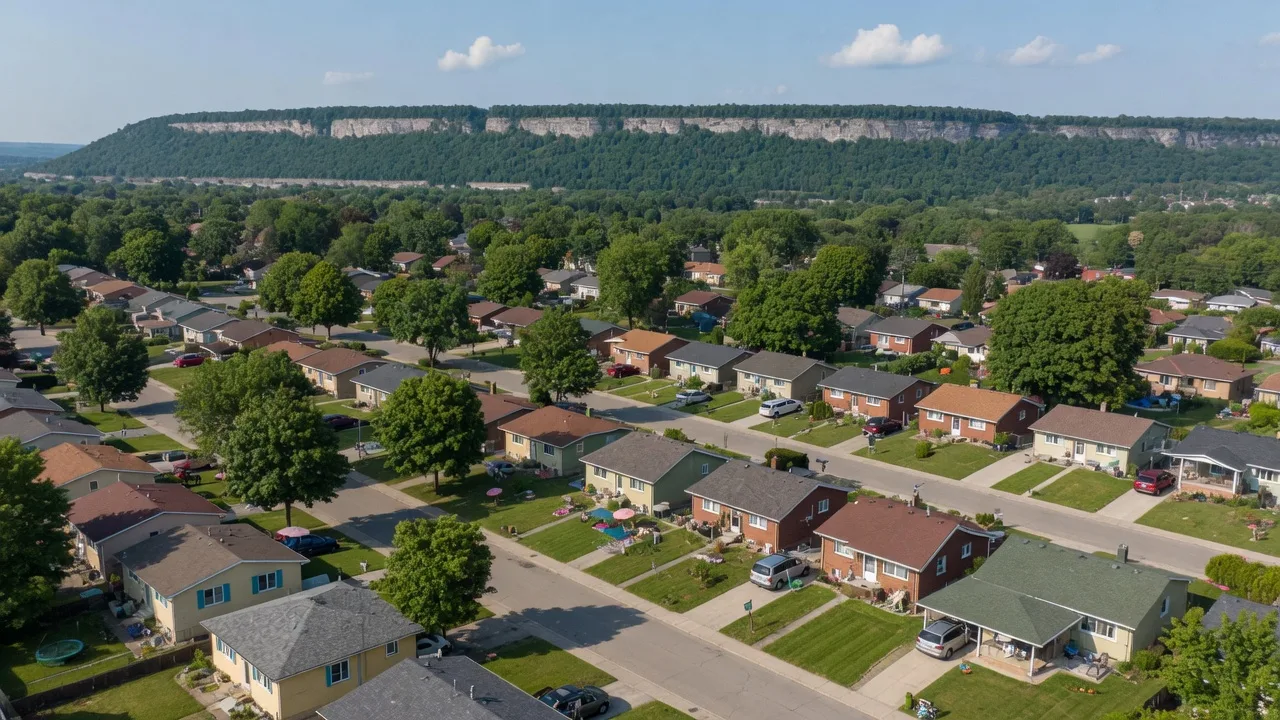
Hamilton Mountain Home Values in 2026: Where Prices Are Headed for the Rest of the Year
What the data says about price trends, inventory, and what sellers should watch for through late 2026.
By Tory Akene, REALTOR® | Real Broker Ontario Ltd. · · 7 min read
If you are a Hamilton Mountain homeowner thinking about selling, you have probably been watching the market headlines with a mix of curiosity and concern. Prices have softened from their 2024 peak, inventory has risen, and the days of automatic double-digit appreciation are behind us. But here is the question most sellers are asking me this summer: is the bottom behind us, or is there more downside ahead? Based on the data available in late July 2026, the answer is cautiously optimistic. The market is stabilizing, and the conditions are aligning for a gradual recovery through the second half of the year and into 2027.
Where We Are Now: A Mid-2026 Market Snapshot
To understand where prices are headed, it helps to start with a clear picture of where they stand today. Across the broader Hamilton area, the MLS HPI benchmark price sits at approximately $737,000 to $744,000, depending on the source. That represents a year-over-year decline of about 5.4% from mid-2025 levels. On the Hamilton Mountain specifically, average sale prices are running closer to $697,000 to $700,000, reflecting the Mountain's generally more affordable mix of housing types compared to neighbourhoods like Ancaster or Dundas.
The sale-to-list ratio across Hamilton sits at approximately 97.5%, meaning homes are selling very close to their asking price on average, but rarely above. The days-on-market figure has settled at 34 to 45 days city-wide, which is a balanced market pace. Active listings regularly exceed 2,000 properties, giving buyers meaningful choice. These are not boom conditions, but they are also not a crash. The market is finding its equilibrium after a two-year correction.
What is encouraging is the direction of month-over-month movement. After declining steadily through the first half of 2025 and into early 2026, prices in the Hamilton region have been stabilising in recent months, with some sources reporting modest month-over-month gains. The steepest part of the correction appears to be behind us.
What the Forecasters Are Saying About Late 2026
The consensus among major forecasters and economists, including CMHC, CREA, and TD Economics, points to a gradual strengthening through the second half of 2026, with more meaningful price growth expected in 2027.
Several factors support this outlook:
Interest Rate Stabilisation
The Bank of Canada held its key interest rate steady through mid-2026, and many economists expect modest rate cuts before the end of the year. Even a quarter-point reduction can improve buyer confidence and affordability. Lower rates mean lower monthly mortgage payments, which brings more buyers into the market and puts upward pressure on prices. The difference between a 4.5% and a 4.25% mortgage rate on a $700,000 home is roughly $100 per month, but the psychological impact on fence-sitting buyers is significant.
Pent-Up Buyer Demand
Many buyers have been waiting on the sidelines through the uncertainty of 2025 and early 2026. As economic confidence improves and the trade war concerns that weighed on the market begin to fade, these buyers are starting to re-enter the market. The Hamilton Mountain, with its relative affordability compared to Toronto and the GTA, is a natural destination for families who have been waiting for the right time to buy. I am already seeing more first-showing offers and shorter time-on-market for well-priced homes than I was in the spring.
Inventory Stabilisation
Inventory levels, while elevated, are not rising indefinitely. CMHC data suggests that many of the new listings hitting the market are from investors who purchased during the boom and are now looking to exit. As these distressed listings work their way through the system, the supply-demand balance is expected to tighten. Fewer new listings combined with steady or rising buyer demand equals a more favourable environment for sellers. The sales-to-new-listings ratio in Hamilton sits around 45%, which is the low end of a balanced market. A ratio above 50% would indicate a tightening market, and several forecasters expect us to reach that threshold by early 2027.
What This Means for Hamilton Mountain Sellers
If you are considering selling your Hamilton Mountain home in the second half of 2026, here is how I would translate the data into practical advice:
The Timing Is Not as Bad as the Headlines Suggest
Yes, prices are down from 2024. But the rate of decline has slowed dramatically, and month-over-month values are stabilising. If you need to sell, waiting another six months is unlikely to yield dramatically better prices, and it carries the risk of missing a motivated buyer who is looking right now. The late summer and early fall market typically sees strong demand from families who want to move before the school year or get settled before the holidays.
Pricing Discipline Matters More Than Ever
In a stabilising but still soft market, the first two weeks of your listing are critical. Homes that are priced accurately from day one sell at 97% to 100% of asking within the first 30 days. Homes that are priced 5% to 10% above market sit for 60 to 90 days and eventually sell for less than they would have if priced correctly from the start. The data is clear: a price adjustment after 30 days on market signals weakness to buyers and their agents. Get the price right on day one.
Your Home's Condition Is Your Biggest Leverage
In a market with 2,000+ active listings, buyers have choices. The homes that sell at or above asking are the ones that are move-in ready. Fresh paint, clean carpets, staged rooms, updated kitchens and bathrooms, and well-maintained mechanicals all translate directly into higher sale prices. Every dollar you spend on preparation before listing is likely to return two or three dollars at the negotiating table.
Neighbourhood-Level Variations to Watch
The Hamilton Mountain is not one market, it is several. Price trends vary meaningfully from one pocket to another:
- West Mountain (Mountview, Westcliffe). This area has been the most resilient through the correction. Strong school catchments, larger lots, and escarpment views continue to command a premium. Homes here are selling at or near 100% of asking when priced correctly.
- Central Mountain (Upper James, Ryckman's Corners). The volume leader for sales, but also the area with the widest price range. Well-maintained homes near the Upper James corridor are holding value well, while dated properties requiring significant work are sitting longer and selling for deeper discounts.
- East Mountain (Upper Wellington, Gershaw). Value neighbourhoods that attract first-time buyers and investors. Prices have softened more here than on the West Mountain, but the area offers strong upside potential. As the broader market recovers, the East Mountain is likely to see faster appreciation as buyers seek affordability.
- Upper Stoney Creek. Often grouped with the Mountain market, Upper Stoney Creek has seen steady demand from families looking for newer builds and larger lots. Prices have been stable, with less volatility than some other Mountain pockets.
What to Watch for in the Coming Months
As we move through late summer and into the fall, here are the signals I am watching most closely:
- Bank of Canada announcements. Any rate cut will be a catalyst for buyer activity. Watch the October and December announcements closely.
- Active listing counts. If inventory begins to decline (fewer than 1,800 active listings city-wide), that signals a shift toward sellers. If it rises above 2,500, expect continued softness.
- Sale-to-list ratios. When this number rises above 100% consistently, we are back in a seller's market. Below 95%, buyers hold the advantage. Right now at 97.5%, it is essentially balanced.
- Economic confidence. Trade policy, employment numbers, and inflation data all influence buyer sentiment. A stable economic outlook through the fall would support a stronger spring 2027 market.
The Bottom Line for Sellers
The Hamilton Mountain real estate market in late 2026 is not a market for speculators or flippers. It is a market for serious homeowners who have a realistic understanding of their home's value and are ready to make a move. If that describes your situation, the conditions are more favourable than the doom-scrolling headlines might suggest. Prices are stabilising, buyers are returning, and the fundamentals of the Mountain (affordability, location, schools, and community) remain as strong as ever.
The most important thing you can do is work with an agent who will give you honest, data-driven advice rather than telling you what you want to hear. A realistic price, a well-prepared home, and a smart marketing strategy will still get results on the Mountain, even in a balanced market.
If you would like to know what your specific home is worth in today's market, I offer complimentary no-obligation consultations for Hamilton Mountain homeowners. We will look at the comparable sales, assess your home's condition and location, and build a realistic picture of what you can expect.
Sources & References
- • Zolo — Hamilton Housing Market Report (July 2026)
- • Wowa — Hamilton Housing Market Report (July 2026)
- • Nesto — Hamilton Housing Market Outlook (2026)
- • TD Economics — Provincial Resale Market Outlook (2026)
- • Team KP — "Hamilton Real Estate in 2026: Is Now the Right Time to Buy or Sell?" (2026)
- • CMHC — Housing Market Outlook, Ontario Region (2026)
- • CREA — National Price Map (June 2026)
- • Realtors Association of Hamilton-Burlington (RAHB) — Market Statistics (2026)
Want to know what your Hamilton Mountain home is worth in today's market?
I offer complimentary no-obligation home value consultations for Hamilton Mountain homeowners. We'll review the latest comparables and build a realistic picture together.
Book a Free Consultation