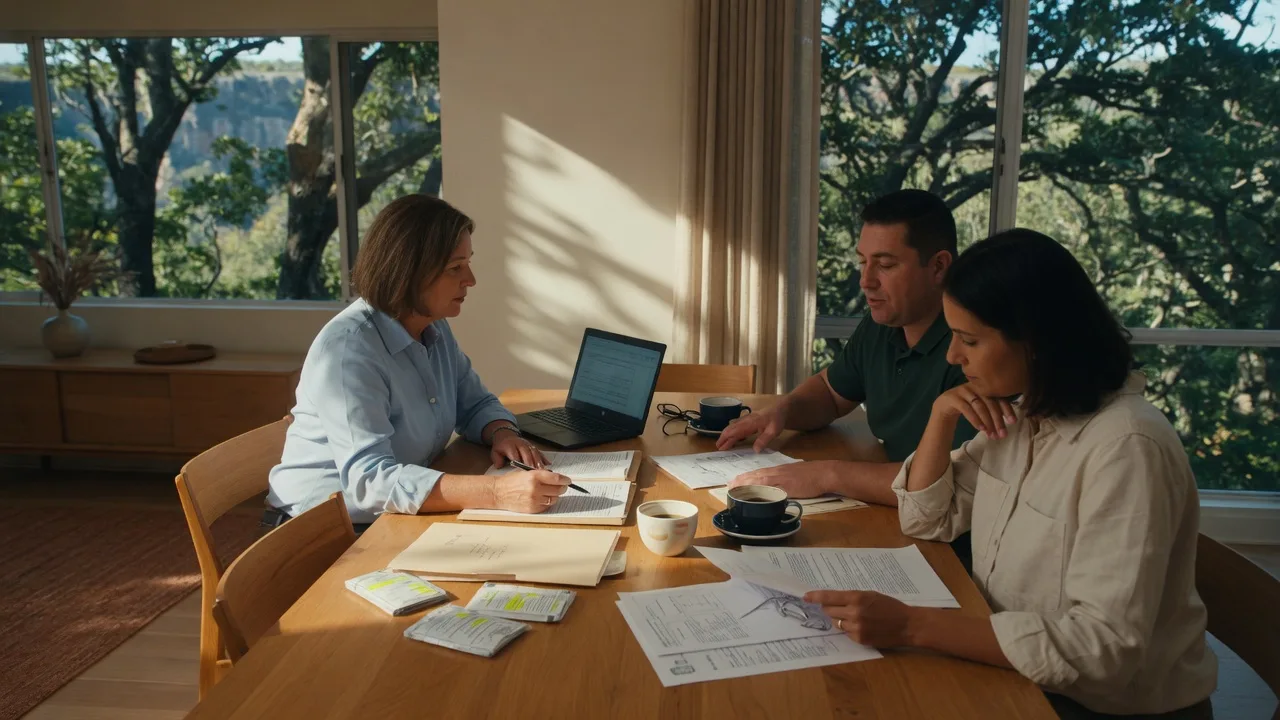
How to Negotiate the Sale of Your Hamilton Mountain Home: A Seller's Guide to Getting the Best Deal
The offer is on the table. Now what? Here is a practical guide to navigating real estate negotiations on the Hamilton Mountain with confidence, from the first counteroffer to the final signed deal.
By Tory Akene, REALTOR® | Real Broker Ontario Ltd. · · 7 min read
You have listed your Hamilton Mountain home, you have staged it beautifully, and the showings have been rolling in. Then it happens: the offer arrives. Whether it is your first offer or your fifth, how you handle the negotiation phase determines not just the final sale price but the terms, the timeline, and whether the deal closes at all. In the current Hamilton market, where the sale-to-list ratio hovers around 96% to 97% and inventory levels give buyers room to be selective, negotiation skills matter more than ever. Here is everything you need to know as a Hamilton Mountain seller.
Understanding the Current Negotiation Landscape on the Mountain
The Hamilton real estate market in mid-2026 is best described as balanced, with subtle shifts favouring buyers in certain pockets. According to recent market data, the benchmark price for the Hamilton area sits around $729,800, and the average home is selling at approximately 96% to 97% of its list price. New listings in July 2026 dropped 20.4% year-over-year and overall inventory fell 13.8%, which means fewer homes are coming onto the market even as buyer activity holds steady. For sellers, that shrinking supply is the single most important negotiating lever you have.
On the Hamilton Mountain specifically, the market varies significantly by pocket. West Mountain homes near good school catchments are still commanding sale-to-list ratios close to 98%, while East Mountain properties may see offers 3% to 5% below asking. Understanding where your home sits in this spectrum is the foundation of any smart negotiation strategy.
The days of automatic bidding wars are behind us for now, but that does not mean sellers lack leverage. The declining inventory trend means buyers have fewer options each month, and the well-priced, well-presented home still attracts multiple offers. The key difference in 2026 is that those offers tend to be more conservative — buyers are serious, but they are also disciplined.
Before You Receive an Offer: Setting Yourself Up for Negotiation Success
The most important negotiation happens before a single offer arrives. Here is what I recommend every Hamilton Mountain seller do before listing to put themselves in a position of strength:
Price With Data, Not Emotion
The price you set determines the entire negotiation. A home priced 5% above market value will attract 50% fewer showings and sit on the market longer, which weakens your negotiating position every day it stays unsold. Price your home based on comparable sales from the last 60 to 90 days in your specific pocket of the Mountain. If the data says $725,000, list at $725,000 or $729,000 — not $749,000 hoping someone will negotiate up. Buyers in 2026 are well-informed and will not chase an overpriced listing.
Prepare Your Disclosure Package
Buyers and their agents will have questions about your property: the age of the roof, the furnace, the windows, any past renovations, and whether permits were pulled. Having this information ready before the first offer arrives sends a signal that you are organized and transparent. It also reduces the chance that a buyer uses "unknowns" as a reason to lowball or add conditions. A pre-listing home inspection report can be a powerful negotiation tool here — it removes the buyer's ability to discount your price based on unspecified concerns.
Consider an Offer Date Strategy
In a balanced market, setting a specific offer date — typically 7 to 10 days after your first showing — can create a sense of urgency that generates multiple offers. This strategy works best for homes in desirable pockets of the Mountain, particularly in the West Mountain and Ancaster areas. If your home is in a slower-moving pocket, a traditional "offer anytime" approach may work better. Your agent should advise you on which strategy fits your specific situation.
Evaluating the Offer: It Is More Than Just the Price
When an offer arrives, most sellers look at the number at the top of page one and decide whether they are happy or disappointed. But the purchase price is only one component of a deal, especially in a market like ours where every term matters. Here is what else you should evaluate:
Deposit Size
A larger deposit signals a committed buyer. $50,000 or more on a $700,000 home tells you the buyer has financial depth and is unlikely to walk away over minor issues. A $10,000 deposit on the same home suggests less commitment.
Closing Date Flexibility
If the buyer can match or accommodate your ideal timeline, that has real value. A 60-day close versus a 90-day close can save you thousands in carrying costs if you need the equity for your next purchase.
Conditions & Contingencies
A firm offer (no conditions) is worth more than one with conditions. A financing condition carries more risk than an inspection condition. Evaluate how many conditions the buyer has requested and how long the conditional period lasts.
Inclusions & Exclusions
What is the buyer asking you to leave behind? Standard inclusions like appliances are expected, but requests for window coverings, light fixtures, or even the backyard shed should be considered as part of the overall deal.
In practice, I have seen sellers accept a slightly lower price in exchange for a firm offer with a flexible closing date, and I have seen them reject a higher price because the buyer's conditions were too risky. Every deal is different, and the "best" offer depends entirely on your personal situation and priorities.
How to Handle the Lowball Offer
It stings when the first offer comes in 10% below asking. But here is the truth: a lowball offer is still an offer, and it tells you that someone is interested enough to put a number on paper. In a balanced market with 3.6 months of inventory, lowball offers are more common than you might expect. The question is not whether to be offended — the question is what the offer tells you about the buyer's mindset and how to respond strategically.
Do Not Reject Outright
A rejection with no counteroffer shuts the door entirely. Instead, respond with a signed counteroffer at or near your asking price, supported by the comparable sales data. This keeps the conversation alive and signals that you are serious but reasonable. Many buyers start low expecting a counter — your job is to bring them toward your number with facts, not emotion.
Ask Questions Through Your Agent
A buyer offering 10% below asking may have a reason: they think the home needs significant repairs, they are comparing it to a different property, or they are testing the seller's motivation level. Your agent can have an informal conversation with the buyer's agent to understand the logic behind the offer. That information can guide your counteroffer strategy.
Know Your Walk-Away Number
Before you enter any negotiation, decide the minimum price and terms you would accept. Write it down. Share it with your agent. This number is your anchor — if a buyer cannot reach it after a reasonable back-and-forth, you walk away with confidence rather than frustration.
Negotiating Beyond Price: Strategic Concessions That Cost You Little
In a balanced market like the one we are seeing on the Hamilton Mountain in 2026, the most successful negotiations are often the ones where both sides feel they gained something. As a seller, you have more bargaining chips than just the purchase price. Thoughtful concessions can bridge a gap without cutting into your bottom line.
- Flexibility on closing. If the buyer needs 75 days and you wanted 60, an extra two weeks of carrying costs (roughly $3,000 to $5,000 in mortgage interest, property tax, and utilities) is far cheaper than a $15,000 price reduction.
- Including specific items. The washer and dryer you were planning to replace anyway, the dining room chandelier, or the outdoor furniture could be the deciding factor that turns a maybe into a signed deal. The cost to you is minimal, but the perceived value to the buyer can be significant.
- Offering a home warranty. A one-year home warranty plan costs roughly $400 to $600 and provides peace of mind to buyers concerned about unexpected repairs. For a seller, it is an inexpensive way to remove a common objection.
- Covering a specific repair. If the home inspection reveals a $1,500 roof repair, offering to fix it or credit the buyer for the cost is often cheaper than renegotiating the entire price. It also builds goodwill and keeps the deal moving toward closing.
The Multiple Offer Scenario: A Step-by-Step Approach
Even in a balanced market, well-priced homes in desirable pockets of the Mountain can generate multiple offers. If you find yourself in this fortunate position, here is how to navigate it fairly and strategically:
Step 1: Review Every Offer Carefully
Do not just look at the price. Look at the deposit, the conditions, the closing date, the financing pre-approval letter, and whether the buyer has sold their current home. The highest price is not always the best offer — a slightly lower firm offer can be worth more than a higher conditional one.
Step 2: Decide Your Scoring Criteria
Rank the offers based on what matters most to you. If your priority is the highest net price, score that heavily. If you need a fast close, prioritize closing date. If you want certainty, prioritize firm offers. Share your priorities with your agent and let them guide the process.
Step 3: Choose Between Best-and-Final or A Counteroffer
If you have three or more offers, asking all buyers to submit their best-and-final by a set deadline often yields the strongest results. If you have two strong offers, you may choose to negotiate with both or go back to your preferred buyer with a counter. Your agent's experience with local market norms will be invaluable here.
Step 4: Communicate Clearly and Fairly
Ontario real estate regulations require that all buyers competing for the same property be treated fairly. Your agent should communicate the process clearly to all parties and ensure deadlines are transparent. A fair process protects you legally and preserves your reputation in the market.
Common Negotiation Mistakes Hamilton Mountain Sellers Make
After years of helping families sell their homes on the Mountain, I have seen the same mistakes surface again and again. Here are the ones to avoid:
- Getting emotionally attached to the list price. Your home is worth what the market will pay, not what you hope it is worth. If the data says your price is high, adjust before you lose buyer momentum.
- Taking lowball offers personally. A low offer is a negotiating tactic, not an insult. Respond with data, not emotion, and keep the conversation productive.
- Ignoring the buyer's conditions. A buyer with financing conditions needs a mortgage approval. A buyer with an inspection condition needs to feel confident in the home's condition. Work with their timeline and provide access quickly so conditions are removed as fast as possible.
- Negotiating directly with the buyer. Let your agent handle the back-and-forth. Direct communication between seller and buyer can create awkwardness, misunderstanding, or legal exposure. Your agent is trained to negotiate on your behalf and protect your interests.
- Focusing only on price. A great price with terrible terms can leave you with less money in your pocket than a fair price with excellent terms. Look at the whole picture.
When to Walk Away: Knowing Your Limits
Not every negotiation ends in a deal, and that is okay. If a buyer is unwilling to move within striking distance of your walk-away number, the right move is to decline and wait for the next offer. In a market with declining inventory, the next buyer may be just around the corner.
The signs that it is time to walk away include: a buyer who refuses to budge on multiple terms, unreasonable demands after inspection, or a significant gap between their offer and your minimum that cannot be bridged with concessions. Your agent should give you honest feedback about whether the gap is worth negotiating or whether it is time to move on.
I have seen sellers accept deals they regretted because they were tired of waiting or felt pressured by an agent. Do not let fatigue drive your decision. Your home is one of the biggest financial assets you will ever own — it deserves a deal that works for you.
The Bottom Line: Negotiation Is a Skill You Can Master
Selling a home is an emotional experience, but the negotiation phase benefits most from a clear head and a strategic approach. The Hamilton Mountain market in 2026 rewards sellers who prepare thoroughly, price realistically, and understand that every term on the offer is negotiable. The best deal is not always the highest number — it is the combination of price, terms, and timing that meets your specific needs.
Whether you are selling a starter home on the East Mountain, a family property in the Central Mountain school zone, or a premium listing in the West Mountain or Ancaster area, the fundamentals of good negotiation stay the same: know your data, know your priorities, and work with a local agent who understands the nuances of your pocket of the Mountain.
If you are considering selling your Hamilton Mountain home and want to discuss a personalized pricing and negotiation strategy, I would be happy to sit down with you. We will review the latest comparables for your specific street, discuss your priorities, and build a plan that positions you to get the best possible outcome.
Sources & References
- • NiagaraHomes — "Hamilton Real Estate Market Update" (July 2026)
- • Cornerstone Association of REALTORS® (CAR) — Market Statistics (2026)
- • The O'Reilly Group — "Hamilton Real Estate Guide 2026"
- • CMHC — "Housing Market Outlook, Ontario Region" (2026)
- • HomeLight — "5 Deal-Closing Real Estate Negotiation Tips for Sellers"
- • Luxury Presence — "9 Real Estate Negotiation Strategies for Agents in 2026"
- • Judy Marsales Real Estate — "Hamilton Real Estate Market Conditions" (2026)
- • Voortman Realty — "2026 Hamilton Area Market Outlook"
Ready to sell your Hamilton Mountain home?
I offer complimentary no-obligation home value consultations for Hamilton Mountain homeowners. We will review the latest comparables for your specific street, discuss market conditions, and build a negotiation strategy that works for you.
Book a Free Consultation