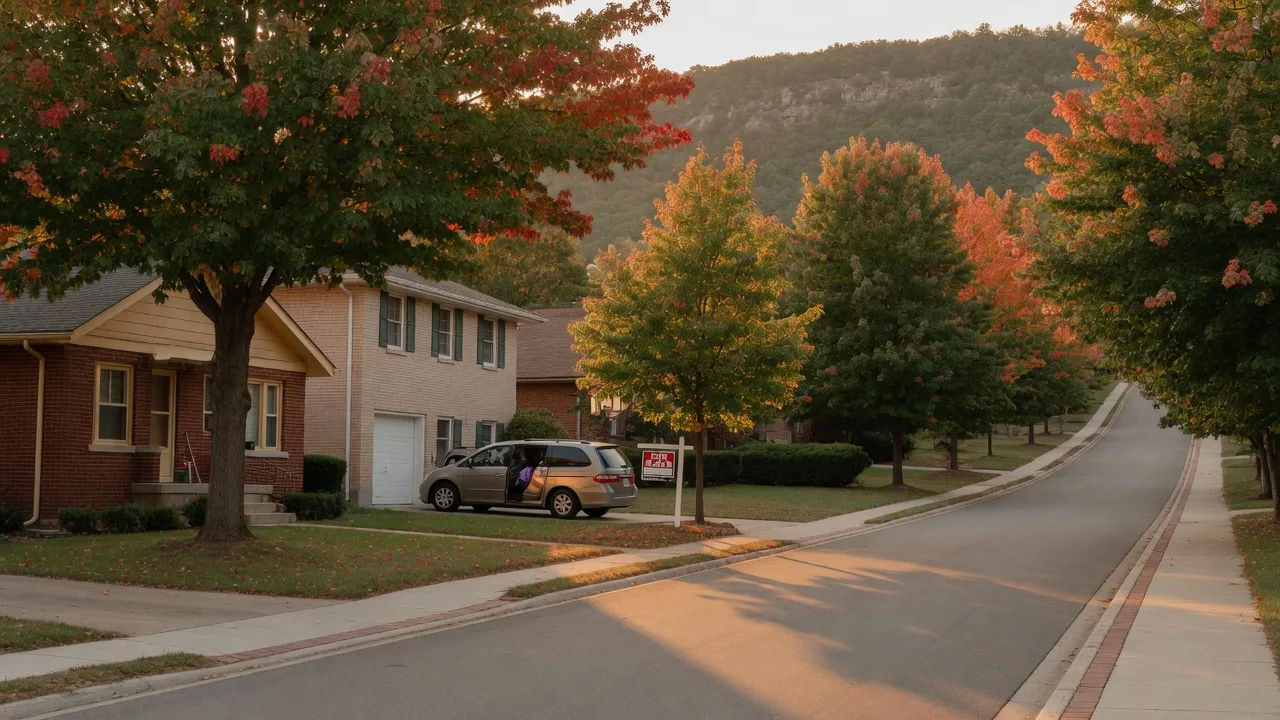
Hamilton Mountain Fall 2026 Market Preview: What Sellers Need to Know About the Shifting Season
Prices are stabilizing, inventory is tightening, and buyers are returning. Here is the data, the strategy, and the timeline for Hamilton Mountain sellers heading into the fall market.
By Tory Akene, REALTOR® | Real Broker Ontario Ltd. · · 8 min read
The Hamilton real estate market is at a crossroads heading into the late summer and early fall of 2026. After a prolonged correction that saw average prices drop roughly 5.4% year-over-year and inventory levels swell to nearly 2,200 active listings city-wide, the data is now pointing toward a stabilization — and in some pockets of the Mountain, a quiet recovery. For sellers who have been waiting on the sidelines, the early fall window may be the best opportunity of the year to list with confidence. Here is a deep look at the numbers, the neighbourhood trends, and the practical strategy you need to make the most of the current market.
The Market Has Found Its Floor — For Now
Across the broader Hamilton area, the average home price settled at approximately $746,000 in June 2026, according to recent market reports. That represents a 10% decline year-over-year, but the rate of decline has slowed considerably. The Royal LePage Q1 2026 report showed the aggregate price in Hamilton at $807,000, down 6.7% from Q1 2025 but up 1.8% from Q4 2025 — a clear sign that the market found a floor in the winter and has been building from there.
On the Hamilton Mountain specifically, average sale prices are running closer to $697,000 to $705,000, reflecting the Mountain's more affordable housing mix compared to areas like Ancaster or Dundas. The sale-to-list ratio sits at approximately 97.5%, meaning homes are selling very close to asking price on average — a balanced market number that tells us buyers are willing to pay fair market value but not chase a bidding war.
CMHC's 2026 outlook projects that prices will remain largely flat through the remainder of the year, with modest appreciation expected to return in 2027 as economic conditions improve and the supply-demand balance tightens. That matters because it means there is no crash coming, but equally, there is no rocket ship waiting to launch. The market is steadying, and sellers who act during this window are selling into stability rather than uncertainty.
Inventory Is Shifting — Here Is What the Numbers Show
After months of ballooning inventory that left buyers spoiled for choice, the supply picture is beginning to tighten. Sales rose 6% year-over-year in June 2026, while new listings dropped 8.7% over the same period. That combination — more sales, fewer new listings — is the classic formula for a market that is moving from buyer-favourable back toward balance.
The sales-to-new-listings ratio in Hamilton now sits at approximately 45%, which is the low end of a balanced market. A ratio above 50% signals a tightening market that favours sellers, and several forecasters, including TD Economics and CREA, expect us to cross that threshold by early 2027. For sellers listing this fall, that means you are entering the market just ahead of the inflection point — a strategic sweet spot where buyers are active but competition among sellers is beginning to ease.
The average days-on-market for the Hamilton area has settled at 34 to 45 days, depending on price range and location. Well-priced, well-presented homes on the Mountain are selling in under 30 days in many cases. Homes that are overpriced or poorly maintained are sitting for 60 to 90 days and eventually selling for less than they would have with a realistic starting price.
Interest Rate Relief Is Changing Buyer Behaviour
The Bank of Canada's policy rate has dropped to 2.25% as of mid-2026, down from the cycle peak and providing meaningful relief to mortgage shoppers. Lower rates improve affordability and, perhaps more importantly, improve buyer psychology. A buyer who was priced out at 4.75% may find that a 4.25% or 4% mortgage rate puts their target home on the Mountain within reach again.
The difference in monthly payment between a 4.5% and a 4.0% mortgage rate on a $700,000 home with a 20% down payment is roughly $150 to $170 per month. That does not sound like a lot, but for a family stretching to afford their first home or their next home, it can be the difference between qualifying and not qualifying. Every rate cut brings a new wave of buyers into the market, and the cumulative effect of the cuts we have already seen is starting to show up in showings and offers.
Many economists expect the Bank of Canada to hold or cut rates further through the fall, depending on inflation data and broader economic conditions. Any additional cuts before the end of 2026 would be a further tailwind for sellers, particularly in the family-home segment on the Mountain where buyers are most sensitive to monthly carrying costs.
Neighbourhood-Level Variations on the Mountain
One of the most important things I tell sellers is that the Hamilton Mountain is not one market — it is a collection of micro-markets, each with its own supply-demand dynamics, price trends, and buyer profiles. Here is how the different pockets are shaping up heading into fall 2026:
West Mountain (Mountview, Westcliffe, Mohawk)
The West Mountain continues to command the highest prices on the escarpment, driven by strong school catchments, larger lots, and mature tree-lined streets. Homes priced under $900,000 are selling fastest, particularly those that are move-in ready. The West Mountain was the most resilient area through the correction, and it remains the strongest performer heading into the fall. Expect sale-to-list ratios of 98% to 100% for well-priced properties.
Central Mountain (Upper James, Ryckman's Corners)
The volume leader for Mountain sales, Central Mountain offers the widest range of housing types and price points. Well-maintained family homes near the Upper James corridor are holding value well, while dated properties needing significant work are sitting longer and commanding larger discounts. The walkability of the Lime Ridge Mall area and access to public transit make this pocket popular with first-time buyers and downsizers alike. Average prices here range from $625,000 to $775,000 for single-family homes.
East Mountain (Upper Wellington, Gershaw, Crown Point East)
The East Mountain offers the most affordable entry point on the escarpment, with prices running $550,000 to $675,000 for most single-family homes. This area has seen the sharpest price declines through the correction, but it also offers the most upside potential as the market recovers. Investors and first-time buyers dominate this pocket. For sellers in the East Mountain, the key to a fast sale is aggressive pricing — homes under $600,000 are attracting multiple showings within the first week.
Ancaster
While technically on the escarpment rather than the Mountain proper, Ancaster is a key part of the upper-city market. Prices here start around $850,000 for a detached family home and climb well past $1.2 million for premium properties. The Ancaster market has held up better than the Mountain during the correction, with shorter days-on-market and higher sale-to-list ratios. Buyers in Ancaster tend to be established families and professionals with less dependence on mortgage rates — a different buyer profile that makes this market less volatile but also harder to predict.
Upper Stoney Creek
Upper Stoney Creek continues to attract families looking for newer builds and larger lots at prices that undercut the West Mountain. The area has seen stable demand through 2026, with average detached prices between $750,000 and $875,000. The newer inventory in this pocket is appealing to buyers who want modern finishes without renovation costs. The Felker's Falls and Fifty Point conservation areas add to the appeal for outdoor-oriented families.
Why the Early Fall Window Matters for Sellers
The traditional real estate cycle on the Hamilton Mountain follows a predictable pattern: a strong spring market (March through June), a quieter summer lull (July and August), and a solid fall market (September through November) driven by families who want to close before the winter holidays.
In 2026, the fall market is shaping up to be more active than usual for several reasons:
- Pent-up demand from spring. Many buyers who sat out the spring market due to uncertainty about rates and prices are now feeling more confident. The stabilization of prices and the rate cuts have given them a clearer picture of what they can afford.
- Less competition from sellers. With new listings dropping 8.7% year-over-year, there are fewer homes for buyers to choose from than there were this spring. Less competition means your listing gets more attention.
- School-year timing. Families with school-aged children are motivated to close before the end of November to settle into a new home and school before the winter break. Buyers in this cohort are often more serious and more ready to make a decision than the casual browsers of summer.
- Favourable interest rate outlook. With the Bank of Canada holding at 2.25% and potential additional cuts on the horizon, buyers are locking in rates now rather than waiting and risking a rebound in both rates and prices.
Practical Strategy for Fall Listings
If you are planning to list your Hamilton Mountain home this fall, here is how to position yourself for the best possible outcome:
Time Your Listing for Early September
The ideal window for a fall listing on the Mountain is the first week of September, when families are back into their routines and buyers are actively searching. List too early (mid-August) and you risk launching during the summer lull. List too late (October) and you risk missing the motivated family buyers who want to close by November. Aim for a launch date between Labour Day weekend and mid-September for maximum buyer attention.
Invest in Professional Photography and Staging
In a market with 2,000+ active listings, your online presence is everything. Homes with professional photography sell 32% faster and for 4% to 6% more than those with amateur photos, according to industry data. Staging is especially important in the fall, when shorter days and variable weather mean you have fewer natural-light hours for showings. A staged home photographs better, shows better, and signals to buyers that the home has been cared for.
Price for Today's Market, Not Yesterday's
The single biggest mistake I see from sellers in this market is pricing based on what their neighbour sold for in 2024. That data is irrelevant now. Price your home based on recent comparable sales — ideally within the last 60 to 90 days, from the same pocket of the Mountain, and with similar size, age, and condition. A realistic price from day one will generate showings, offers, and a sale within 30 days. An optimistic price will generate a stale listing that sits for 60 days and eventually sells for less.
Make Your Home Move-In Ready
Buyers in a balanced market have the luxury of being picky. They are comparing your home to every other listing in the same price range, and they will choose the one that requires the least work. Fresh paint in neutral tones, clean carpets, a spotless kitchen and bathrooms, and tidy landscaping all make a measurable difference in how quickly your home sells and what price it achieves. The ROI on pre-listing preparation is consistently high in this market.
Signals to Watch Through the Season
As we move through late summer and into the fall, here are the five metrics I am watching most closely — and that you should watch too if you are planning a sale:
- Monthly active listing count. If inventory drops below 1,800 city-wide, the market tilts toward sellers. Above 2,200, buyers retain the upper hand.
- Sale-to-list ratio by neighbourhood. A ratio consistently above 98% in your pocket means buyers are paying close to ask — a green light to list.
- Bank of Canada rate announcements. The next scheduled rate decisions are in September and October. Any cut will trigger a surge in buyer activity within 48 to 72 hours.
- Average days-on-market. If this number drops below 30 days for your price range, you are in a seller-favourable pocket and can price more confidently.
- New listing volume. Fewer new listings than the same month last year means less competition. Watch the week-over-week trend, not just the monthly number.
The Bottom Line for Hamilton Mountain Sellers
The Hamilton Mountain real estate market in the late summer and early fall of 2026 is not a market for quick flips or speculative gains. It is a market for homeowners who need to sell for a real reason — a growing family, a job change, downsizing, or a move to the next chapter — and who are willing to price and present their home thoughtfully. If that describes your situation, the conditions are more favourable than the headlines suggest.
Prices have stabilized, inventory is beginning to tighten, and buyers who sat out the uncertainty of 2025 and early 2026 are starting to return. The early fall window, with its motivated family buyers and favourable interest rate environment, offers a strategic opportunity for sellers who are ready to act. Waiting until spring 2027 carries the risk of higher inventory and more seller competition, while listing now positions you in front of a serious, active buyer pool.
Every home on the Mountain is unique — your specific street, pocket, and property type will have its own supply-demand dynamics. The numbers in this article are city-wide and regional averages; your actual sale price will depend on many factors, including your home's condition, location, and the effectiveness of your marketing strategy. A personalized market analysis from a local agent who knows your neighbourhood is the best way to get an accurate picture.
If you are thinking about selling this fall and would like a complimentary, no-obligation consultation on your home's value and the best listing strategy for your situation, I would be happy to help. We will review the comparables, assess your home's position in the market, and build a plan that makes sense for your timeline and your goals.
Sources & References
- • Nesto — "Hamilton Housing Market Outlook 2026"
- • Royal LePage — "Housing Price Market Report: Hamilton Q1 2026"
- • CMHC — "Housing Market Outlook, Ontario Region" (2026)
- • Voortman Realty — "2026 Hamilton Area Market Outlook"
- • RE/MAX Canada — "Hamilton-Burlington Housing Market Outlook 2026"
- • Elevated & Co — "2026 Real Estate Market Forecast Hamilton/Burlington/GTA"
- • CREA — National Price Map (June 2026)
- • Realtors Association of Hamilton-Burlington (RAHB) — Market Statistics (2026)
Thinking about selling your Hamilton Mountain home this fall?
I offer complimentary no-obligation home value consultations for Hamilton Mountain homeowners. We will review the latest comparables, discuss market conditions in your specific pocket, and build a strategy that fits your timeline.
Book a Free Consultation