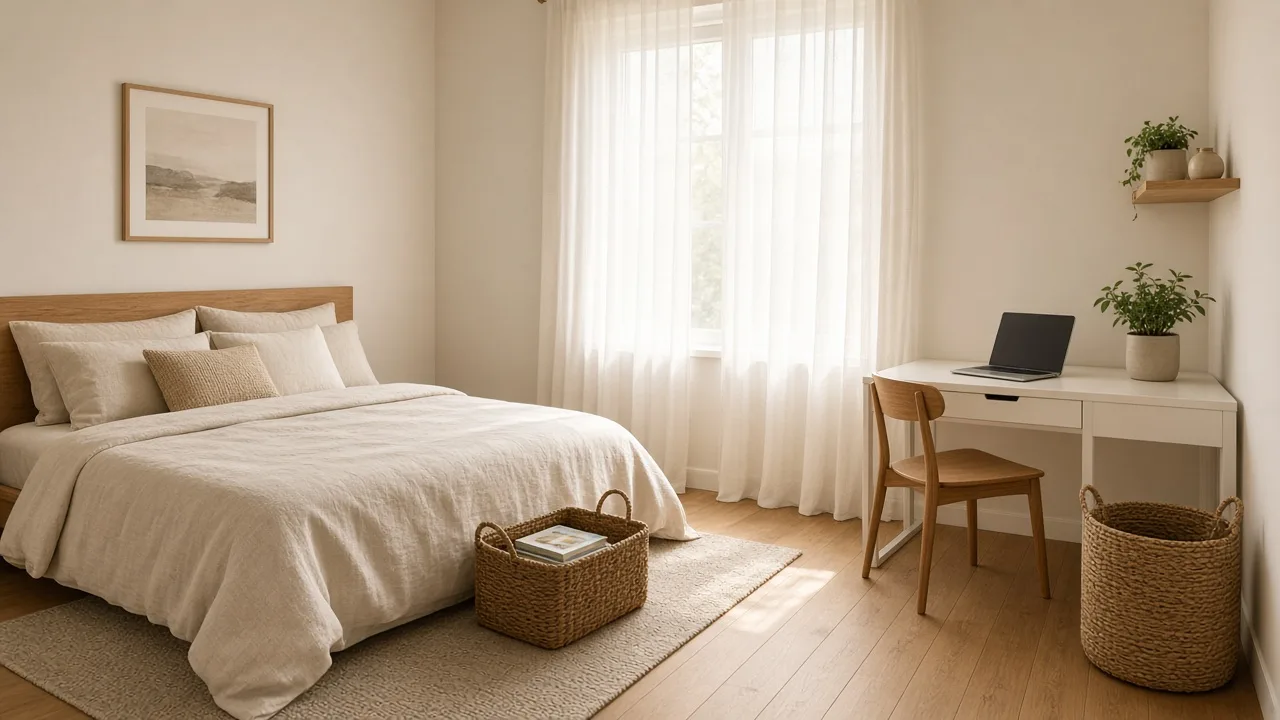
We Need Another Bedroom or a Home Office: Should We Move?
By Tory Akene, REALTOR® | Real Broker Ontario Ltd. · · 6 min read
If your family is running out of bedrooms, or you have been balancing a laptop on the kitchen table for a while now, the obvious question becomes: should we move? My honest answer is that it depends on whether your problem is the size of your home or the shape of it. Spend an hour naming exactly what is not working, because that single step decides whether moving or adapting is the smarter path for your family.
The short answer
If your home genuinely cannot hold your household for the next few years, moving usually wins. If the problem is one room, one season of life, or a layout you can rework, adapting is usually cheaper, faster, and far less stressful than selling and buying at the same time.
Name the real problem before you shop for solutions
"We need more space" covers a lot of different problems, and they do not all have the same fix. Get specific, as a family:
- A real bedroom that a child can actually sleep and study in, with a door that closes.
- A proper home office, meaning quiet, private, and not cleared off every night for dinner.
- A better layout, where the kitchen connects to life instead of a hallway, or where no one has to walk through a bedroom to get anywhere.
- Storage for the stuff that makes every room feel full.
- Distance from each other, so one person can work late or one child can play music without everyone else hearing it.
The distinction matters because an extra bedroom and a better layout are bought differently. A bedroom can sometimes be conjured out of a dining room, a den, or a basement. A layout problem usually means a renovation or a move, and that is where the real decision starts.
The room test: try the change before you commit to a move
Here is a hypothetical example to test with. Imagine a family of four in a three-bedroom side-split on the Mountain, where both parents work from home a couple of days a week and the office is a corner of the dining room that gets cleared off every evening. The honest question is not whether they "need an office"; it is whether a quiet, closed-off workspace exists somewhere in the house without renovation.
For one month, actually use the spare room or the basement rec room as the office. Move the desk, set up the monitor, keep the door shut during a workday, and see what breaks. If the new room works, you may have just saved yourself the whole cost of moving. If it does not, you have learned something precise about what the next home must provide.
What adapting actually costs, and what it does not fix
Renovation returns vary by project, market, and how long you stay, and very few projects pay back their full cost when you sell. Treat any renovation as a change you will live in and enjoy, not as an investment that guarantees a higher sale price, and fix the exact problem you named, nothing more.
A basement conversion is the classic Mountain candidate, since so many bungalows and side-splits here have a lower level that just needs a purpose. The catch is the rules: in Ontario, a legal bedroom needs proper ceiling height and an egress window that opens to the outside, and it needs building permits. Some lower levels were finished decades ago under older rules and will not qualify as bedrooms today. Before you plan around a conversion, get a contractor's quote and check with the City of Hamilton's building division about what your basement would need.
A quote is free information. Even if you end up moving, knowing that the fix would cost $8,000 or $40,000 tells you exactly how much value the missing space represents, and that number belongs in your decision.
What moving actually costs
Moving buys you a layout that was designed for your life, not adapted to it. It also costs more than the difference in price tags: commission and legal fees on the sale, land transfer tax on the purchase, moving costs, and the time and energy of two transactions at once. The guide to selling before you buy a bigger home walks through those numbers and the timing strategies in detail.
Compare the two paths side by side: the complete cost of the renovation that solves your problem, against the complete cost of selling, buying, and moving, minus what a different layout adds to your daily life. On the Mountain, where a well-prepared bungalow or side-split in a strong school catchment holds real value, that second number is often bigger than families expect.
Six questions that decide it
-
Can a different room assignment fix it this week with only a rearrangement?
No cost, one weekend, and you learn the truth fast.
-
Will this need still be here in three years, or is it a season?
A baby, a guest room, a renovation phase, and a work-from-home routine are different time horizons.
-
Does your home have room to grow, or are you landlocked?
Lot size, basement height, and layout all decide whether there is anywhere to go.
-
What would a contractor charge to solve the actual problem?
One written quote turns a vague worry into a number you can compare.
-
What would the same monthly cost buy you in a different home?
Ask a lender what the payment would be before you fall in love with one.
-
What would you be giving up?
School catchment, commute, neighbours, the yard the kids grew up in. Write it down so the choice is deliberate.
When each path wins
Adapting wins when...
- The problem is one room or one purpose, and a permit-able fix is straightforward.
- You love your street, your catchment, and your commute.
- You can live in the home for another five years once the fix is done.
Moving wins when...
- The layout itself fights your family every single day.
- Your household has grown and will keep growing.
- The renovation would be so large it is basically a rebuild anyway.
Your next three steps
- Get a quick sense of your current home's value with the home valuation tool, so you know the equity working for you either way.
- Ask your lender what the payment would look like for the home you think you want, including selling costs and land transfer tax.
- Get one contractor's quote for the fix that would actually solve the problem, then put the two numbers side by side and decide with both in front of you.
If the numbers point to moving, the Seller Hub covers preparation and pricing, and the Upsizing Guide looks at what more space actually costs on the Mountain. The Move-Up Planner turns your family's space needs and timeline into a starting plan.
The bottom line
If the missing space is one room you can rework, adapt, and enjoy. If the layout itself cannot hold the life you are building, moving is not a failure; it is the natural next chapter, and it deserves a proper plan rather than a rushed decision.
Frequently Asked Questions
Is it cheaper to add a bedroom or to move to a bigger home?
There is no universal answer. On the Mountain it depends on the project and the home, but a permitted conversion can cost a fraction of a move and only helps if it solves the real problem. Get a contractor's quote and an agent's estimate of what a bigger home costs, then compare the two complete pictures including selling costs and land transfer tax.
Can we turn our basement into a legal bedroom?
Only if it meets the Ontario Building Code: proper ceiling height, an egress window that opens to the outside, and the right permits. Many older Mountain basements were finished under earlier rules, so check with a contractor or the City of Hamilton's building division before you plan around it.
How do we know if moving is the right decision for our family?
Run the six-question test above, then put the two numbers side by side: what the fix costs and what the move costs. If they are close, the decision comes down to five years of your family's life and which option leaves you in the home you actually want.
Not sure whether to move or make it work?
Bring your list of what is not working to a complimentary call with Tory Akene, and we will put the real numbers beside each other: what the fix costs, what the move costs, and what your home is worth either way. Let's plan your next move.
Book a Free Call